Integration by Design: Where Strategy and AI Become One System
Discover how true transformation happens when AI integration is designed from the start. Learn why strategic clarity amplifies AI's value and how blending human creativity with AI execution turns technology into a powerful brand amplifier. Unlock competitive advantages with systems that adapt and grow smarter over time.
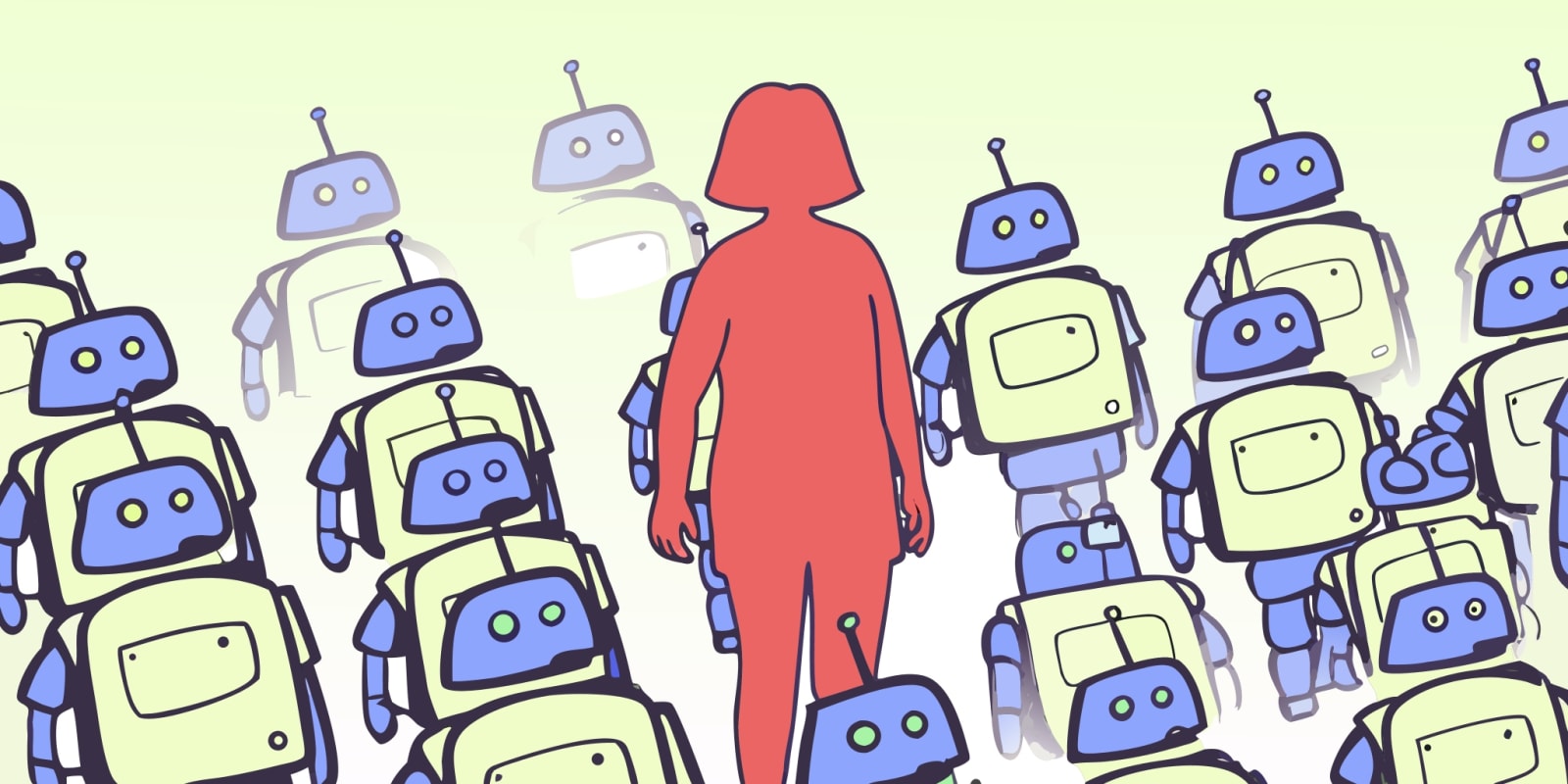
Most companies approach AI like a bolt-on upgrade—something to “try” after strategy is complete. The result? disconnected tools, fragmented workflows, and ai generated content that sounds generic instead of strategic.
Real transformation happens when automation and strategy aren’t separate—they’re one integrated system from the start. This shift from fragmented content workflows to AI-powered drafting inside closed-loop systems changes everything for content marketers operating in today’s digital ecosystem.
Strategic clarity isn’t a luxury before adopting AI. It’s the foundation that makes AI-generated content exponentially more valuable. Without it, even the best AI writing tools just accelerate chaos. With it, every automated touchpoint becomes smarter, sharper, and aligned with your brand’s unique value proposition.
Related: How AI-Powered Marketing Engines Are Reshaping Portland’s Tech Firms
The best organizations don’t layer AI on top of outdated processes. They redesign their modern tech stack so human creativity sets the direction and AI scales execution—without sacrificing the human touch that builds trust and drives real customer engagement.
AI isn’t just about efficiency. It’s about compound intelligence—systems that learn, adapt, and improve with every cycle. When integrated into business strategy, AI provides data-driven insights that inform better decisions faster, turning every interaction into both signal and lesson.
Using tools like Surfer SEO, HubSpot, and Jasper.ai (including the ai-content generator jasper), brands now combine automation with strategy-driven content marketing workflows—producing SEO-related content, social assets, and even short-form content across formats with stunning speed.
In many stacks, AI also scrapes search results to support research, but the real search intent still needs human interpretation—and teams should always fact-check outputs before publishing.
But here's the paradox: the more powerful the tool, the more vital the human. It’s not “AI vs. people.” It’s strategy-led humans guiding systems that scale.
See how brand safety transforms AI output →
Integrated systems rely on human-led writing to define direction, positioning, and customer relevance—while AI handles production and performance optimization.
The biggest risk with an ai blog writer or copy tools like Copy.ai is brand dilution. The fix? Train AI to reflect your tone, not generic internet language.
At Amoebaworks, we install systems built on a Messaging Codex—a structured reference that teaches your AI stack how to write with clarity, consistency, and context.
Here’s how that process works:
Phase 1: Voice Calibration Train models on high-performing copy, brand belief systems, and existing content—not just a blog post outline or surface-level prompts.
Phase 2: Workflow Integration Connect AI to your CMS, CRM, and content creation process. Use AI automation tools for scale, but keep humans in the loop for approvals and strategic pivot points.
This is where ai flows and practical governance matter most: the goal is a system that can support a wide range of outputs (from landing pages to video editing scripts) without losing your voice.
Phase 3: Continuous Refinement Track AI output like you would a product launch. What resonates? What drifts? Use those insights to refine your prompts and boost content consistency.
Also read: AI Content Governance – Keeping Automation Brand-Safe
Done right, AI doesn't dilute your voice—it amplifies it. Teams using these systems report 3× faster output, 60% lower costs, and dramatically reduced rewrites—without sacrificing brand integrity or creativity.
Companies winning with AI aren’t running side experiments—they’re installing strategic content systems that:
Anticipate change with AI-driven signal tracking
Scale production across a wide range of content formats
Measure real search intent and optimize accordingly
Loop performance data back into strategy to evolve messaging dynamically
This is AI marketing integration by design—not chance—and it’s often supported by an ai marketing platform that connects planning, production, and distribution.
Governance isn't about slowing down. It’s about building safeguards that enable ai creative workflows to move faster, with confidence. From brand-safe output to reduced risk, these integrated systems offer a competitive advantage that scales.
If you’re evaluating potential fit, it helps to separate the concept (strategy + system design) from the tooling layer (e.g., scenario ai experiments, ai image generation add-ons, or standalone generators).
Your system is only as good as its feedback loop. Here are metrics that matter for integrated systems:
⚡ Efficiency
Speed from brief to publish
Cost per asset (vs. manual workflows)
Volume of quality content output
📈 Effectiveness
Engagement lift (shares, time on page)
Conversion from AI-personalized content
Sales-qualified leads and pipeline health
🔁 Learning
System accuracy over time
Prompt-to-publish revision rates
Strategy adaptation speed
Platforms like Surfer SEO and HubSpot can tie AI content workflows to pipeline velocity, giving teams real-time clarity into ROI.
But the real unlock isn’t just the dashboard. It’s the culture of iteration—the idea that every piece of ai copy generation becomes data for the next smarter cycle.
Under the hood, many of these systems rely on natural language processing to route briefs, classify topics, and keep content workflows moving—without turning the process into a black box.
FinTech Client
Installed a closed-loop AI content system across 12 markets. Outcome: 3× faster output, 60% cost reduction, and brand voice alignment. 👉 See the Healing Essence Case Study
Healthcare SaaS
Launched an AI brand assistant trained via Messaging Codex. Result: 20% engagement lift and rapid GTM. 👉 Explore the New York Times Case Study
B2B Services Company
Used integrated content workflows with real-time tracking. Net impact: 70% ROI uplift, 2× more qualified leads.
Each success story starts the same way: strategy first, tools second. AI blog writers didn’t replace teams—they freed them to focus on vision and ship stunning blog posts with more consistency.
The future isn’t “AI or humans.” It’s integrated systems where humans define vision and AI executes with precision.
Brands that build for real innovation management—not tooling chaos—create sustainable growth loops. Those relying on little human input or disconnected tools fall behind.
If your AI content workflows aren’t tied to strategy, voice, and feedback loops, you’re just adding noise.
Stop chasing tools. Start designing intelligent infrastructure.
When you install AI systems that sync with your business strategy, voice, and workflow—you unlock a content engine that gets sharper every cycle.
That’s the compounding power of integration by design—and the difference between fragmented automation and true content marketing performance.
See how Amoebaworks installs AI systems that compound →