Nogin positioning case study: from eCommerce software vendor to Growth Operations partner
How Nogin reframed its story from eCommerce software vendor to Growth Operations partner—simplifying the tech stack narrative, tightening messaging, and accelerating sales conversations.
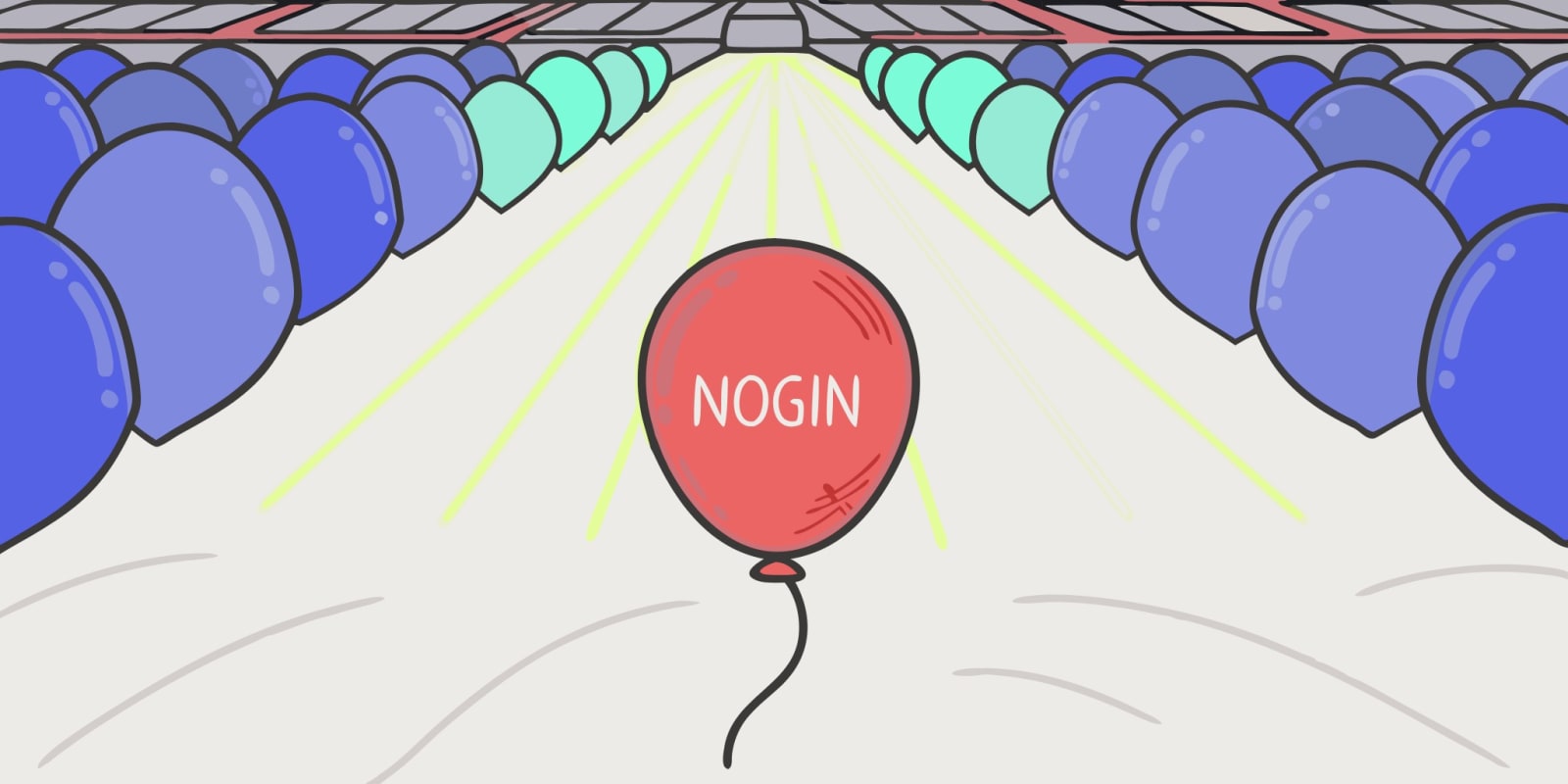
Nogin didn’t have a product problem. They had a language problem.
If you sell digital commerce infrastructure—or any enterprise commerce solution—you already know the trap:
You can be technically right—and still lose.
Because in a crowded stack, buyers don’t reward “capable.” They reward “clear.”
Nogin had real operational horsepower: an eCommerce SaaS platform with deep capabilities. But to the market, it read like every other tool in the pile of commerce solutions.
Software. Features. Modules. Integrations.
The story wasn’t wrong.
It just wasn’t working.
This Nogin positioning case study shows how we reframed a misunderstood platform into a category-level offer buyers could instantly place: a Growth Operations partner, not a vendor.
The context: when your deck reads like a manual
Nogin’s go-to-market materials were accurate.
But they were optimized for product truth—not buyer understanding.
And when you sell into eCommerce, confusion kills deals in three predictable ways:
You get compared on features, even when you win on outcomes.
You get priced like a tool, not a partner.
Every team tells a different story, because no one has a shared narrative spine.
If that sounds familiar (especially for entrepreneurs and operator-led teams), you don’t need “more content.”
You need a tighter system underneath the message.
(That’s the whole point of Brand OS: one place where your positioning, content flywheel, and brand-trained AI stop freelancing.)
The problem: Nogin had a great offer—buried under the wrong framing
In a bloated eCommerce tech ecosystem, differentiation isn’t decoration.
It’s survival.
But Nogin was selling features when they should’ve been selling outcomes. Their pitch sounded like a platform vendor even when the business behaved like an operator—deep in the messy reality of ecommerce operations.
So the market sorted them into the wrong mental bucket.
And once a buyer makes that category decision, everything downstream gets harder:
stakeholder alignment
pricing conversations
“why you” vs. “why now”
The insight: the product didn’t need to change. The positioning did.
This wasn’t a rebrand.
It was a repositioning.
Nogin didn’t need prettier words.
They needed a new market frame—a category that matched the job buyers were actually hiring them for.
That frame became:
Growth Operations partner
Not “software you implement.”
A partner that simplifies and runs the operational side of growth—especially for teams scaling from scrappy to serious, including growing digital brands enterprise solutions.
If you want the deeper logic behind this move, it’s the same principle we teach here: Category design: create a new class, or compete in the old one.
What changed (the positioning install)
1) We designed the category: “Growth Ops”
We reframed Nogin from eCom tech to strategic infrastructure.
A Growth Ops partner is understood differently than a platform:
platforms get evaluated (classic vendor evaluation behavior)
partners get trusted
That single shift changes who gets brought into the conversation, what objections show up, and what kind of pricing feels rational.
2) We translated technical value into executive language
This is where most eCommerce companies bleed deals.
They try to win with the truth.
But buyers decide with clarity.
So we moved messaging from:
feature lists
internal terminology
“how it works” explanations
To:
outcomes
operational lift
what gets simpler, faster, cheaper, safer
The exact same capabilities.
Now they sounded like they mattered.
3) We simplified the “stack story”
When the market sees you as “one more tool,” you get priced like one.
So we clarified how Nogin fit into—and often replaced—bloated stacks (including a homegrown platform, a complex custom build, or point tools that inflate tech spend).
This made cost savings and operational value legible without requiring a 30-minute architecture walkthrough—and it helped buyers understand the impact on enterprise retail, enterprise payments, and even omnichannel conversion.
(If you’re trying to scale this kind of clarity across a growing team, the missing ingredient is usually strategic memory. Start here: Strategic memory: the hidden engine of adaptive marketing systems.)
4) We built a narrative that scaled from sales decks to investor calls
Nogin didn’t need “better copy.”
They needed one story that could hold:
sales enablement
marketing pages
outbound messaging
partner conversations
investor narrative
So the team stopped remixing the company every time someone asked:
“So what do you guys actually do?”
This is the difference between a company with messaging and a company with a system.
(If you want the operational version of that difference, see: Marketing dependency: breaking the habit inside Silicon Forest companies.)
Results (what changed in the business)
Once the story matched the role Nogin actually played, the business outcomes followed:
Shorter sales cycles because buyers understood the offer faster
Support for premium pricing because the value story matched the ask (and justified premium support expectations)
Internal alignment because teams stopped guessing what to say
New doors opened as partners and investors could place Nogin in a clearer category
No gimmicks.
Just a story that finally made the company legible.
Why it worked (the mechanism)
This repositioning worked because it changed the comparison set.
Nogin stopped competing as “another eCommerce platform.”
They started showing up as operational infrastructure for growth—real growth solutions, not another dashboard.
That’s the whole game in saturated markets:
Don’t pitch harder. Change the frame.
A practical framework for your own ecommerce operations strategy
If your business is stuck in vendor-speak, here’s a simple checklist you can run.
1) Ask: what are buyers really hiring us for?
Not what you built.
Not what’s on the roadmap.
The actual job you get pulled into urgent calls for.
2) Name a category that matches that job
If the category is wrong, every downstream asset has to work too hard.
3) Translate features into executive outcomes
If your messaging can’t survive a CFO skim, you’re not done.
This is also where a successful ecommerce strategy stops being “feature-driven” and becomes outcome-driven.
4) Simplify the stack narrative
Your buyer should understand where you fit in one pass—whether they’re running a business model b2c, supporting a wholesale business, or selling like a b2b leader.
If you’re selling internationally, don’t bury it: mastering global trade is an exec-level outcome, and integrated technology drives cross-border success is a story buyers can actually repeat.
5) Build a system that keeps the story consistent
If you scale volume without scaling coherence, you get noise.
If you want a blueprint for installing that consistency, this is a solid place to start: AI systems for marketing: brand-safe automation that compounds.
And if you’re worried AI will dilute the voice you’re trying to sharpen, read: How to scale content without losing what makes you human.
What the broader market agrees on (quick context)
If you want outside confirmation that “operations + clarity” is where eCommerce wins are heading:
A strong eCommerce strategy depends on clear positioning and platform fit—not just feature checklists. (Salesforce)
Operational excellence (fulfillment, inventory, systems) is a core growth lever—not a back-office detail. (Shopify)
Choosing and communicating your unique value proposition is foundational to eCommerce strategy. (Forbes)
And in practice, “platform fit” often means naming what you’re built on (or replacing): the Shopify platform, salesforce, or something headless that needs real Hydrogen support—plus a clear lens on TCO (some teams even reference a Shopify TCO calculator when the stack conversation turns financial).
The takeaway
Nogin wasn’t “misunderstood.”
It was mispositioned.
Once the story changed, the market could finally see what the product had been doing all along.
If you want to see how this kind of repositioning shows up across industries, browse: Amoebaworks case studies.