Mazda’s Power of 3: turning test drives into a belief system (and a 17-city tour)
How Mazda turned dying test drives into a 17-city immersion tour—11,900+ drives, 75% handraisers, 25% hot leads, and buyers far more likely to buy and recommend.
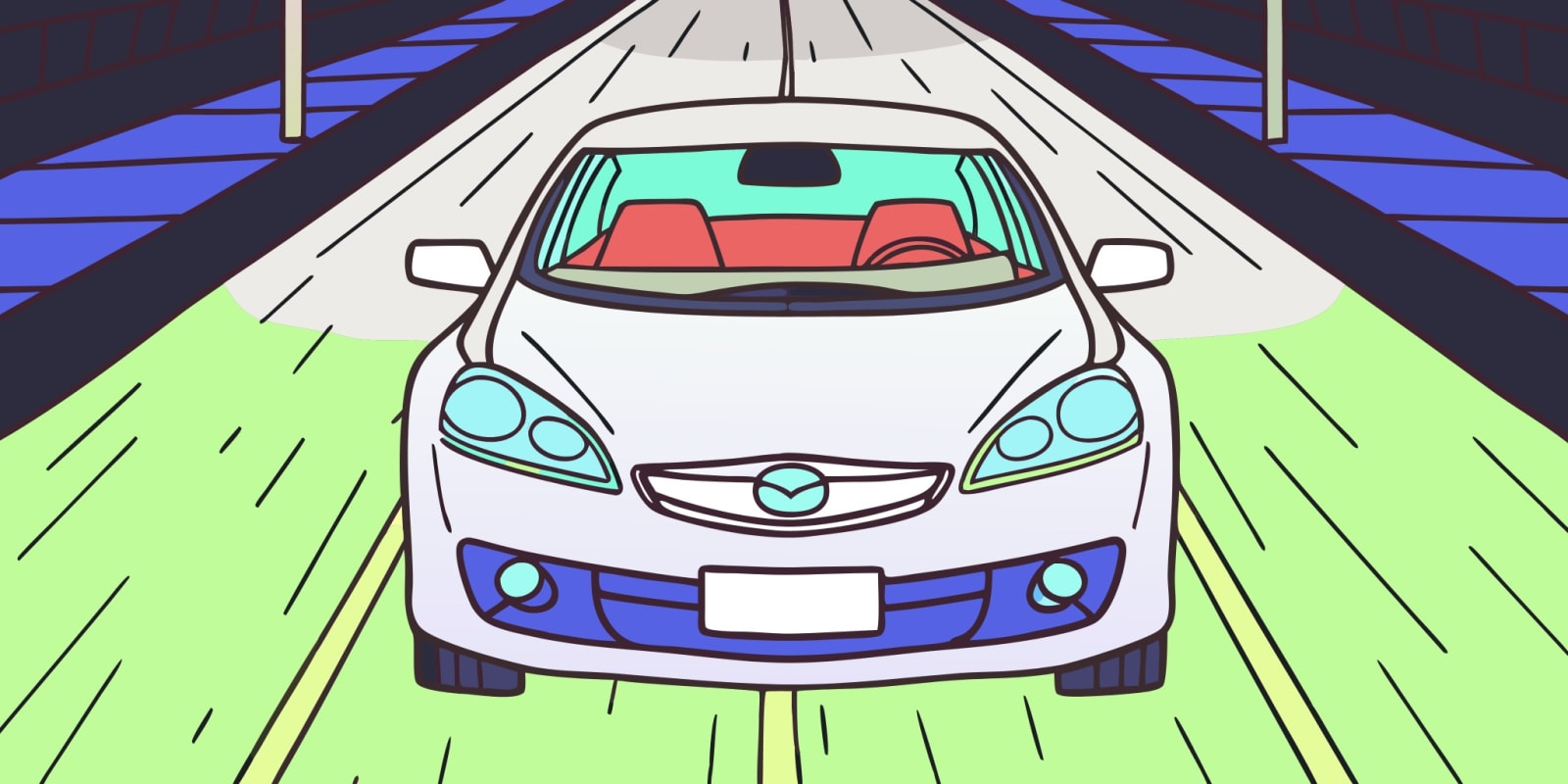
Test drives were dying.
Not because cars got worse.
Because the category did.
By 2014, the “test drive” had become a sterile ritual: a lap around the block, a spec sheet in the cupholder, and a polite handoff to a salesperson.
That format used to work.
Then the market got loud—and the fight for attention got brutal.
Every competitor started looking more premium. More aggressive. More “aspirational.” And the brands who won weren’t just engineering better cars—they were engineering meaning.
This is an experiential marketing case study about what happens when you stop treating the drive like a transaction… and start treating it like the beginning of a worldview.
If you want the punchline up front: this program produced 11,900+ drives, 75% handraisers, and 25% hot leads—while making participants 80% more likely to buy and 85% more likely to recommend.
The real problem wasn’t the Mazda3
Mazda had the engineering.
But they were at risk of being boxed into the “affordable import” corner: practical, reliable, and easy to overlook.
In a category where “better” is table stakes, being “fine” is the fastest way to disappear.
Mazda didn’t need another reason to be considered.
They needed to become a different kind of choice.
That’s the same strategic move we talk about in Different > Better: how to actually stand out in the market.
The insight: when the category breaks, the experience has to change
The problem wasn’t the car.
It was the frame.
Test drives had become:
Functional
Forgettable
Sales-led
One-way communication
So Mazda stopped trying to “improve the test drive.”
They built a new container for belief.
This is category thinking in practice: don’t compete inside the old ritual—rewrite what the ritual is. (If you want the deeper strategy lens, this connects directly to Category design: create a new class or compete in the old one.)
The reframe: from ride & drive to immersion tour
Instead of a standard Ride & Drive event, the program became a multi-city experience—one of those experiential marketing events that functions as true brand activations, not a test drive with better signage.
Not a gimmick.
A statement.
A way to say: Mazda isn’t a badge you buy. It’s a mindset you join.
The platform was called The Power of 3—built around three values that were meant to feel like a tribe signal:
Conviction
Creativity
Courage
That framing did something most automotive marketing forgets to do:
It gave the drive a reason.
The strategy: turn the car into a catalyst for belonging
Mazda wasn’t trying to win on “more features.”
They were trying to win on meaning—designing brand experiences that could compete with the best auto showcases (and, in some markets, even steal oxygen from big product launches).
The strategy was simple:
Make the Mazda3 feel premium without pretending to be luxury
Replace sales pressure with real conversations
Turn engineering into something people could feel (not just hear about)
In other words: build a belief system that turns interest into identity.
What they built: the Power of 3 immersion tour
1) A 17-city tour built for real roads (and real conversations)
This wasn’t a showroom simulation.
It was a tactile, sensory introduction to the Mazda3—built around routes and moments designed to surface the car’s “I didn’t expect that” qualities for real attendees, not just shoppers-in-passing.
If you’ve ever planned experiential work at scale, you know the logistics are brutal. That’s why many brands default to the simplest version of a ride-and-drive—or they pivot to smaller pop-ups instead. (For a look at how the industry tends to think about venues and operational complexity, see Ride & Drive event venues: a next-level automotive marketing strategy.)
But Mazda used that complexity as leverage.
Because the point wasn’t efficiency.
It was memorability.
And yes—this kind of tour has real-world staffing needs (hosts, route marshals, production) and requires tight coordination with experiential vendors so the experience doesn’t collapse under its own ambition.
2) Three driving phases that made the product story legible
The experience was structured into three phases—each one translating “engineering” into something human.
Sophistication: touch, sound, styling—premium cues without premium posturing
Efficiency: SKYACTIV® tech that was explained and felt, not buried in a spec sheet
Performance: tight corners and real handling moments that created instant contrast against expectation
This is what great experiential design does:
It turns the product into a sequence of proofs—engagement tactics that move people from curiosity to conviction without a deck.
And it avoids a common trap: the “show, then tell” format becoming one-way communication all over again.
3) Demo kits that made engineering physical
Mazda didn’t lecture people about engineering.
They let people play with it.
Unexpected “science experiment” demos (think syringes, pucks, steel strips, cranks) made the SKYACTIV® story visible, not theoretical—classic tech-enabled engagement at street level.
In a crowded category, features are cheap.
Proof is not.
And in some cities, those stations functioned like lightweight one-on-one demos—the kind of micro-moment that does more than any glossy wall copy ever will.
4) An innovator spotlight that turned the drive into a cause
This is where the program crossed the line from “cool event” to “movement.”
Participants weren’t just invited to test drive.
They were invited to support one of three real-world changemakers.
That move did two things at once:
It gave the experience moral weight (Mazda stands for something)
It gave the participant identity weight (drivers stand for something too)
Belonging is the hidden conversion lever.
It also created a natural engine for social sharing—the kind that doesn’t feel like “post this,” but “this mattered,” which is where user-generated content actually comes from.
5) A strict “no sales pitch” rule
Every host was trained in “The Mazda Way.”
Real conversations. No funnel theater.
Because the fastest way to kill an experience is to let it feel like a trap—especially when the goal is brand activations that earn trust, not force it.
That also meant the experience didn’t need to hide behind a brochure, a press release, or performative hype. The experience was the message.
Results (the numbers that matter)
Outcome | Result |
|---|---|
Drives completed | 11,900+ |
Handraisers (expressed interest) | 75% |
Hot leads | 25% |
Lift in likelihood to buy | 80% more likely |
Lift in likelihood to recommend | 85% more likely |
This one was built to generate belief.
Mazda didn’t try to prove the Mazda3 was a better drive.
They proved it was a better choice.
That distinction is everything.
Because when you’re marketing inside a mature category, you’re not selling the object.
You’re selling the frame people will use to justify the choice.
The takeaway for founders and marketing leaders
If your “conversion moment” is starting to fail—demo requests, sales calls, trials, test drives—don’t assume your offer is broken.
Ask a better question:
Has the category ritual gone stale?
If it has, you don’t need more persuasion.
You need a new experience architecture.
This is an experiential event case study in that exact move: shifting from a transactional moment to a scalable system of meaning—one of the more durable experiential marketing examples from automotive, because it’s designed to create belief first and qualified leads second.
It’s also a reminder that “experiential” can take different forms—from multi-city tours to smaller activation ideas like pop-up routes, unlocked secret experiences, or even a city-wide game that turns discovery into narrative (the point isn’t the format; it’s the belief it makes tangible).
If you’re building your own version, you don’t need to copy the tactics—you need the underlying measurement ideas (what belief signals matter?), the right experiential event ideas (what moments create contrast?), and the operational realities (partners, budgets, staffing needs, and whether there are exhibitor opportunities or sponsor integrations that help scale without diluting the experience).
And if you’re in a modern tech launch or platform rollout, the same logic applies: sometimes it’s ai product specialists, sometimes it’s ar product demos, sometimes it’s a simple guided drive—what matters is the deliberate design of conviction.
That’s what systems are for. Not automation as a bolt-on, but structure that keeps your narrative intact across channels and cycles.
If you’re building toward that kind of systemized advantage, these are good next reads:
Brand OS (how we install category + content + AI as one operating system)
AI systems for marketing (brand-safe automation that compounds)
Strategic memory (how systems get smarter instead of starting over)
And if you want to see how this thinking shows up across industries—not just automotive—browse the case studies.
If you want an internal appendix for your team, you can even add a short “experiential event faqs” section for stakeholders (timelines, permits, insurance, route design, data capture, and how you’ll avoid turning a great creative event into a lead-harvesting trap). Those practical notes are what turn remarkable moments into successful experiential events—and into strong case studies you can repeat.
Great campaigns fade.
Systems compound.
If you’re ready to build one, start with Brand OS.